Autonomous Lighting Control
Light is not a choice.
It is a must.
Every wall, every corridor, every room in your building shares a silent contract: light must be there, right, always, without anyone asking. We are the first to honour it.
The Autonomous Thesis
Light must be right.
Always. Without
anyone asking.
Light is the single most essential element in any space. It must be there when you need it. It is not a choice , it is a fundamental requirement for every human environment, whether it is a home, a building lobby, a parking structure, a metro station, a friend's house, or a vendor's office.
Yet lighting control , as the industry practices it today , creates friction. Every switch you search for in the dark, every sensor that leaves you stranded in an unlit corridor, every inaccurate colour temperature that makes a space feel wrong , they register. Not as conscious thought, but as a subliminal unease. Your subsenses demand visual validation. A safety tick-mark that tells your body: this space is secure. When light is wrong or missing, that tick never arrives. What follows is discomfort, distraction, and a lingering physiological sense that something is off.
The industry response , schedules, motion sensors, BMS integrations, dashboards, manual overrides , treats the symptom, not the cause. Each adds another layer of complexity that demands yet more attention. None removes the friction. The only solution is full autonomy: a lighting system that decides for itself, in real time, and never asks for permission.
The Control Paradox
You do not control
the air you breathe.
Why control the light you see by?
Light is not a device.
The industry sold you switches, sensors, apps, dashboards, and BMS integrations. They turned light into something you manage. But light is not a device. It is an environmental necessity , like air, like temperature, like gravity. You do not manage gravity. You simply exist within it.
Every interface is a tax.
Every switch you flip, every app you open, every schedule you tweak, every dashboard you check , it taxes your attention. Multiply that by every room, every day, every year. The industry calls it control. Neuroscience calls it cognitive load. The cumulative weight of a thousand micro-interactions that should never have existed.
Wipe the slate clean.
Imagine a building where no lighting infrastructure exists. No switches. No sensors on the wall. No BMS panel. No dashboard. No app. Now design it from scratch. Not what can we add to make light work. But what can we remove until light is inevitable. That is what we did. Every interface we eliminated is an interface you will never need. Every complexity we erased is complexity you will never pay for.
The Redefinition
We have redefined light.
How it behaves. How it reacts. What it demands from you.
Autonomous. Instinctive. Pre-emptive. Self-optimising. Light that does not wait for commands. It anticipates your presence, learns your rhythms, and acts without being asked. You never tell it what to do. It simply knows.
Sub-second. Context-aware. Circadian-accurate. Real-time dynamic. Every transition is seamless, every colour temperature is precise, every response happens before you register the need. The room adapts in the time it takes you to blink.
Light is no longer a system you manage, program, monitor, or override. It is an environmental constant you inhabit , as effortless as the air you breathe, as reliable as gravity, as invisible as it should always have been. We removed every reason to think about it. That is the redefinition.
The most advanced lighting system in the world is the one you never knew was there.
The Impact
Human-centric light.
Designed for how you are wired.
Light is not just something you see by. It is the primary cue that governs your circadian rhythm, your alertness, your mood, and your recovery. Getting it right is not comfort. It is biology.
Health
Your circadian clock is driven by light. Cool blue-rich mornings signal alertness. Warm amber evenings signal recovery. Incorrect light at the wrong time disrupts sleep, weakens immunity, and impairs cognitive function. Autonomous dynamic lighting delivers the exact spectrum at the exact moment your biology demands. Not a schedule. Not a scene. A continuous circadian dialogue between your body and your environment. Better sleep. Sharper days. A healthier rhythm you never have to think about.
Comfort
Discomfort from lighting is rarely conscious. You do not notice the harsh flicker, the wrong colour temperature, the glare, the shadow, the delay. But your nervous system does. Every inaccuracy registers as a low-grade stress signal. Autonomous lighting eliminates every one. Flicker-free at 0.1% resolution. Colour accuracy at CRI > 95. Transitions so seamless they happen before your pupils adjust. The result is a space that feels right in a way you cannot quite name. Because your body no longer has to compensate.
Better Living
When light is right, you sleep deeper, wake clearer, focus longer, and recover faster. Meetings feel less draining. Workspaces feel less oppressive. Homes feel more restorative. The cumulative effect of getting light right every moment of every day is not measurable in lux or lumens. It is measured in how you feel at the end of the day. Lighter. Calmer. More yourself. That is the impact of human-centric autonomous lighting. Not a feature. A fundamental improvement in how you live.

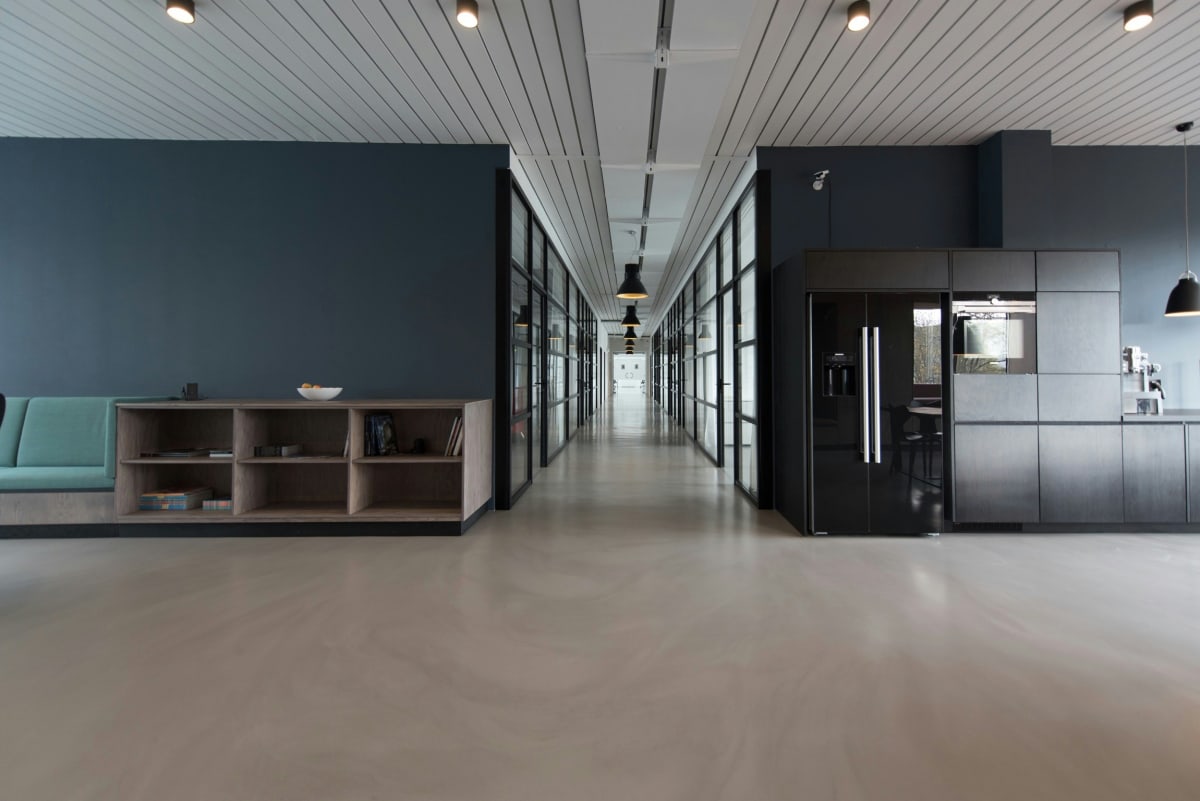
Office & Workspace
An office that sharpens how every mind performs.
The best work environments are the ones you never notice. Light shifts from cool alertness in the morning to warm collaboration by afternoon , because it learned your team's rhythms, not because a timer told it to. Each workstation receives its own micro-climate of light and temperature. Meeting rooms know when a session begins and calibrate instantly. The result is not just productivity , it is the quiet confidence that your environment is working as hard as you are.
Key capabilities
Fully autonomous per-desk lighting , no schedules, no user controls, no BMS integration needed
Conference rooms that sense occupancy and adjust autonomously in under 200 ms , no button to press, no room scheduler to configure
Energy intelligence that harvests daylight before drawing power , 40% average reduction, zero monitoring required
Privacy-first occupancy detection via thermal differential , no cameras, no dashboards to check, no data to manage
Hospitality & Wellness
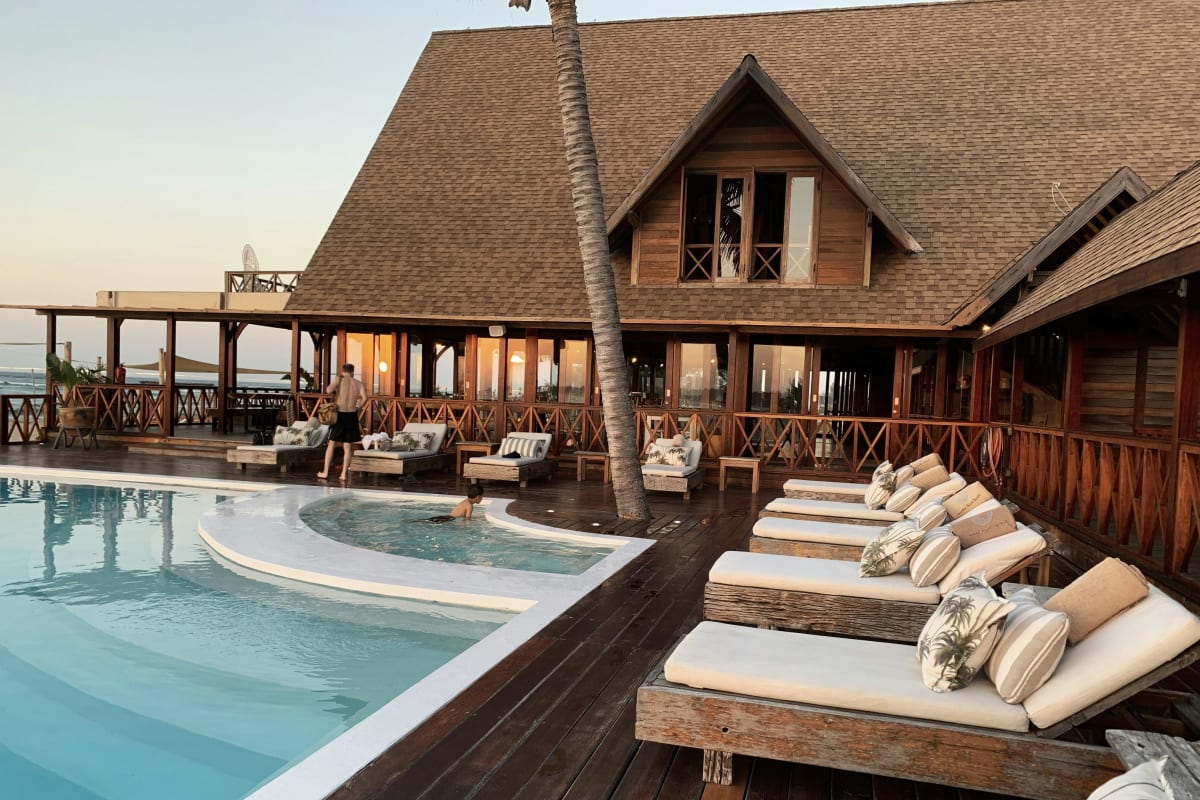
Arrival into atmosphere. Without a single tap.
The moment a guest walks in, the space should greet them , not as a programmed scene, but as an instinct. Guest rooms that read occupancy and set the mood by time of day. Lobbies that breathe from energetic check-in to intimate evening. Every light scene is autonomous. Every comfort system , temperature, sound, air , harmonises around it. The guest touches nothing. They feel welcome, from arrival to departure. No front desk system integration. No room control panel. No guest app. Just light that is simply right, always.
Key capabilities
Arrival sequences that transition from welcome to relaxation , fully autonomous, no PMS integration, no staff intervention
Guest rooms that learn preferences across stays , no configuration required from the guest or the hotel, ever
Lobby atmospheres that pulse with real-time occupancy , no schedule, no scene selection, no dashboard
Back-of-house energy intelligence driven by occupancy data , 30% saved without a single employee noticing or managing it

Common Areas & Infrastructure
Spaces that serve without being seen.
Corridors, lobbies, parking facilities, and common areas consume a disproportionate share of energy because they are lit at full power regardless of use. CleHaus transforms these zones with fully autonomous lighting that responds to real-time presence, daylight harvesting, and environmental profiling , no schedules, no BMS, no central monitoring required. The result is measurably safer spaces, dramatically lower consumption, and infrastructure that pays for itself , while everyone passing through notices nothing but a space that feels right.
Key capabilities
Occupancy-driven illumination that follows traffic in real time , zero waste, zero configuration, zero monitoring
Adaptive colour temperature from security-white to comfort-glow , fully autonomous, no time schedules, no override panels
60–80% reduction in unoccupied-zone energy consumption , typical payback under 18 months, no dashboard required
Integrated emergency protocols , egress glow, fail-safe illumination, tamper-proof , fully autonomous, no BMS integration
The core offering
Autonomous Lighting Control
System.
Not smart. Not automated. Fully autonomous. The system senses, decides, and responds. You do not manage it. You do not override it. You do not even know it is there. It simply works.
Autonomous Lighting Control
Full-spectrum LED arrays, 1800K–6500K tunable, 16-channel spectral control, 0.1% flicker-free dimming, CRI > 95. Sub-second occupancy detection. Decisions made at the edge. Zero cloud dependency. Zero interface required. The room decides. You simply live in it.
Sub-second Occupancy Response
Thermal differential presence detection that triggers autonomous lighting in under 200 ms. No PIR blind spots, no false triggers, no privacy invasion. The space knows exactly who is where , and light follows , instantly, without anyone pressing a button.
Energy Optimisation
Daylight harvesting, occupancy-driven dimming, and predictive load management. 40% average lighting energy reduction, 60–80% in unoccupied zones. No monitoring required , the system optimises itself.
Dynamic Spectrum Control
Full-spectrum arrays that tune colour temperature and intensity to match circadian rhythms, daylight conditions, and spatial activity. Cool focus shifts to warm ambience to deep relaxation , all autonomously, no schedules, no scenes to select.
Zero Interface Ecosystem
From the moment it powers on, the system runs itself. Self-calibrating. Self-optimising. Self-healing. Edge-native processing means it works even if the internet goes down. You never log in, never update firmware, never troubleshoot. You just occupy a space that works.
Behavioural Learning Engine
The system studies how every room is used across days, weeks, and seasons. It learns when the conference room fills up, which desks are occupied at what hour, how natural light shifts through the year. Then it anticipates , before anyone arrives, before the sun shifts, before the pattern changes. It does not react. It predicts.
Commercial-grade performance
By the numbers.
40%
Typical lighting energy reduction
60–80%
Unoccupied zone energy savings
<200 ms
Occupancy-to-response latency
CRI > 95
Colour rendering across all fixtures
99.97%
System uptime , enterprise reliability
Differentiator
Conventional vs CleHaus.
The most advanced lighting
asks for nothing.
A building where every room, every corridor, every transition is simply right. No infrastructure to manage. No interfaces to learn. No energy wasted. No comfort compromised. Autonomous lighting for every space that deserves to work as hard as you do.