
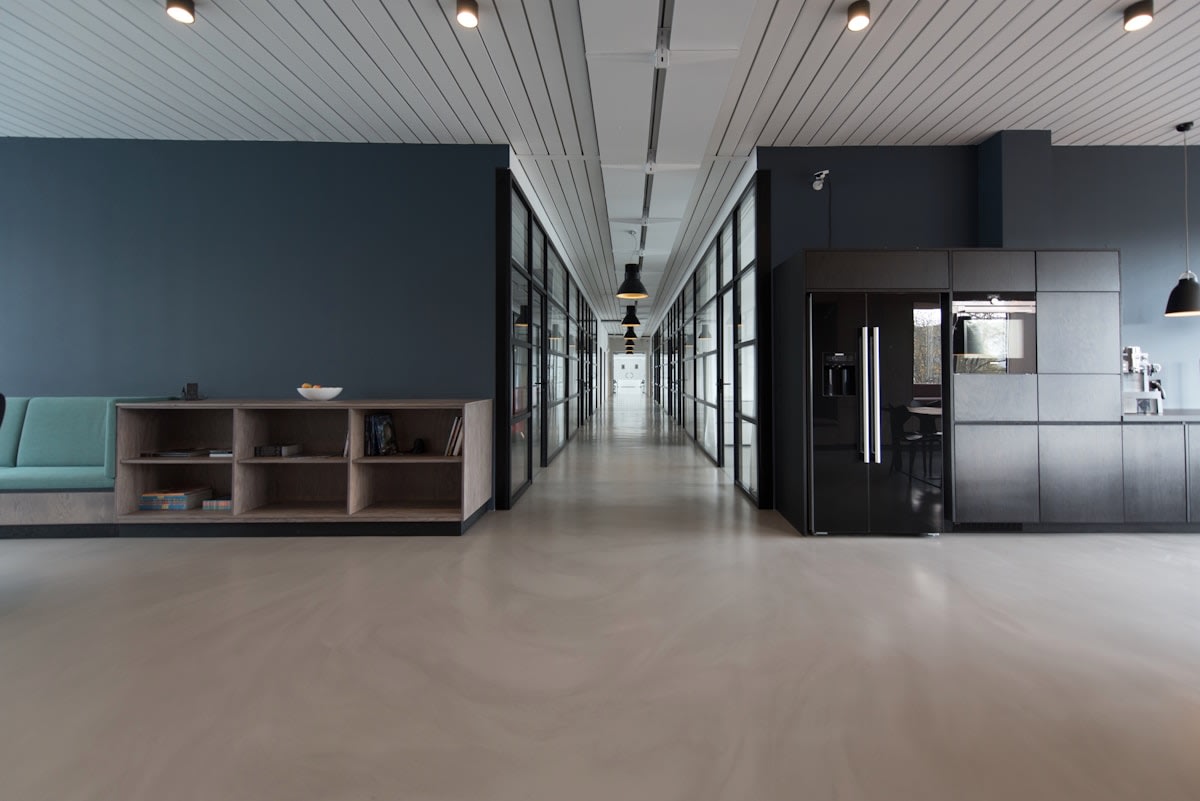
Every office has that moment. It is 2:30 PM. The coffee has worn off. The lights hum at the same flat colour temperature they did at 8 AM. Half the team is fighting to keep their eyes open. The other half is staring blankly at their screens, waiting for a second wind that will not come.
We had experienced this cycle for years. And we assumed it was normal. Until we decided to test whether the culprit was not our work ethic, but our lighting.
The Experiment
For four weeks, we retrofitted our studio with autonomous circadian lighting - the same CleHaus system we install in homes. The goal was simple: measure deep focus hours before and after. We tracked this using a combination of screen-time analytics, self-reported focus scores, and a wearable that measured heart rate variability as a proxy for cognitive load.
The control period (weeks 1-2) used our conventional 4000K office lighting. The test period (weeks 3-4) used the dynamic system, which shifted from a cool 5000K in the morning to a warm 2700K by late afternoon.
The Results
Deep focus hours increased by 30%. The team reported entering flow state earlier in the morning and sustaining it longer. The most dramatic change came between 1 PM and 3 PM - the traditional slump window - where focus scores dropped only 8% compared to 34% under static lighting.
Individual results varied, but the trend was consistent across all six team members. One designer reported completing her most complex layout work in the first two hours of the day, compared to her usual late-night bursts. Another said he stopped needing his afternoon caffeine entirely.
Why It Works
The science is straightforward. Melanopic light - the specific blue-enriched spectrum that activates your circadian system - suppresses melatonin and elevates cortisol in the morning. This is your brain's natural "on" switch. Static office lighting provides some of this signal, but because it never changes, your brain habituates to it within weeks.
Dynamic lighting refreshes this signal throughout the day. The gradual cool-to-warm transition keeps your circadian system engaged without overstimulating it. Your body knows what time it is, not because of a clock on the wall, but because the light itself tells it.
The Unexpected Benefit
What we did not anticipate was the emotional impact. Multiple team members described the warm evening light as "calming" and "civilised." One noted that the transition from cool to warm light served as a natural cue to wrap up, reducing the tendency to overwork. The office felt less like a fluorescent box and more like a living space.
We are not going back.